
Dr. Atrayee Sengupta is a seasoned education leader with over 28 years of experience across boarding, day-cum-boarding, and day schools. She has worked with ICSE/ISC, IGCSE, IB, and CBSE curricula and has been associated with reputed institutions such as Ashok Hall Girls’ Residential School, Almora; Vidya Devi Jindal School, Hisar; The Sanskaar Valley School, Bhopal; and Ashok Hall Girls’ Higher Secondary School, Kolkata.
She holds a Ph.D. in Urban Geography along with advanced degrees in Education and Geography, and has trained at the Harvard Graduate School of Education. Dr. Sengupta is known for fostering inclusive, inquiry-led learning environments that nurture curiosity, creativity, and strong values.
Her leadership strengths include building supportive school communities, guiding student and parent engagement, overseeing pastoral care, and enhancing curriculum and classroom practices. She serves as a National Council Member of the Association of Indian Principals, a CBSE Inspection Committee Member, and a CBSE Resource Person.
Our Leadership
The Knowledge Habitat, Gurugram operates as part of a chain of CBSE schools guided by a shared vision: to build minds prepared for a changing world. This shared purpose is not abstract-it is institutionally supported by the Shiv Nadar Foundation, whose strategic oversight ensures long-term investment, deliberate planning, and steady operational continuity.

Our Story
The Knowledge Habitat is built on the principle that education must prepare students not only for exams, but for life in a changing world. Since our founding in 2015, we have focused on creating structured, outcome-driven environments where students develop clarity, adaptability, and purpose.
Now supported by the Shiv Nadar Foundation, our schools benefit from long-term investment in infrastructure, academic planning, and institutional development-ensuring a consistent and future-ready experience across all campuses.
From the early years through to senior secondary, our approach is deliberate: scaffolded academics, clearly defined routines, and co-curriculars that reinforce the core purpose of learning. We are not driven by trends. We focus on what endures.


Vision & Purpose

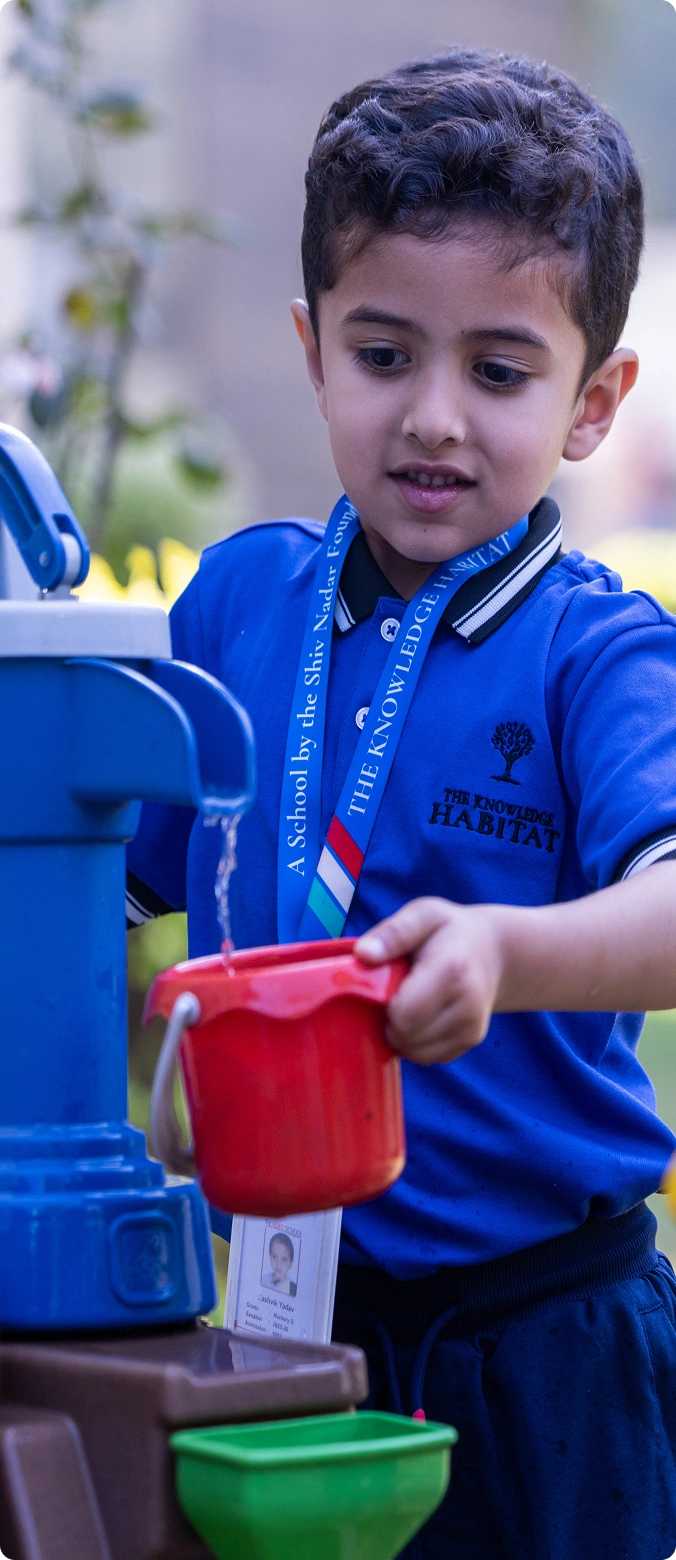
To empower students to be thinkers, doers, learners and changemakers in a caring environment. Our students will be steadfast in their values, enabling them to navigate a complex and ambiguous world with resilience and compassion.

The Knowledge Habitat aims to provide a holistic education that prepares students for life by blending academic rigour with life skills and nurturing curiosity, practical abilities, and meaningful personal growth.
Our Values
Learn with Curiosity, act with Ethics, integrity and Accountability,
Dedication to excellence, lead with Empathy, grow Resilient every day.
We celebrate inquiry as the foundation of growth, nurturing a questioning community that explores perspectives, is innovative, and remains open to learning throughout life.
We uphold honesty, fairness, and responsibility as cornerstones of school life, helping build ethical foundations for decision-making and leadership.
We instill a strong sense of accountability-towards self, others, and the broader world-ensuring that our community continues to develop into thoughtful and active citizens.
We set high expectations for both intellectual and personal growth, encouraging effort, perseverance, and pride in one’s work.
We foster a culture of care and inclusion, where every member of the community is known, supported, and treated with dignity.
We cultivate resilience by helping each member of our community embrace challenges and learn from setbacks, equipping them with confidence to pursue ambitious goals.
Our Guiding Principles
Explore, Excel, Evolve:
Our Campus Journey – Gurugram
At The Knowledge Habitat, Gurugram, learning is built on a progression of habits and practices that deepen over time.
The Explore. Excel. Evolve. framework shapes how students engage with ideas, develop mastery, and grow as individuals. It is not tied to age or grade but is reflected across classrooms, co-curriculars, and student outcomes.

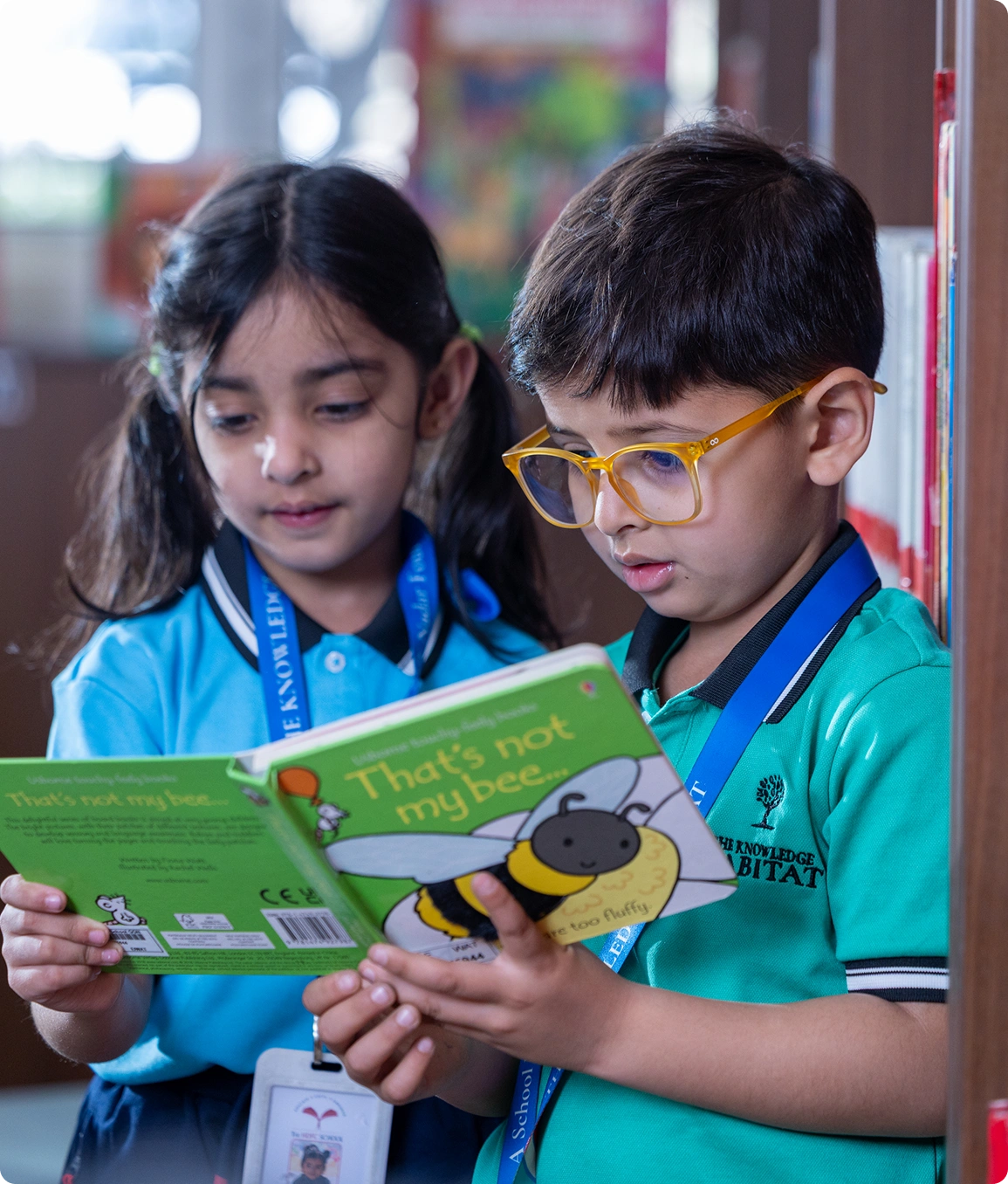
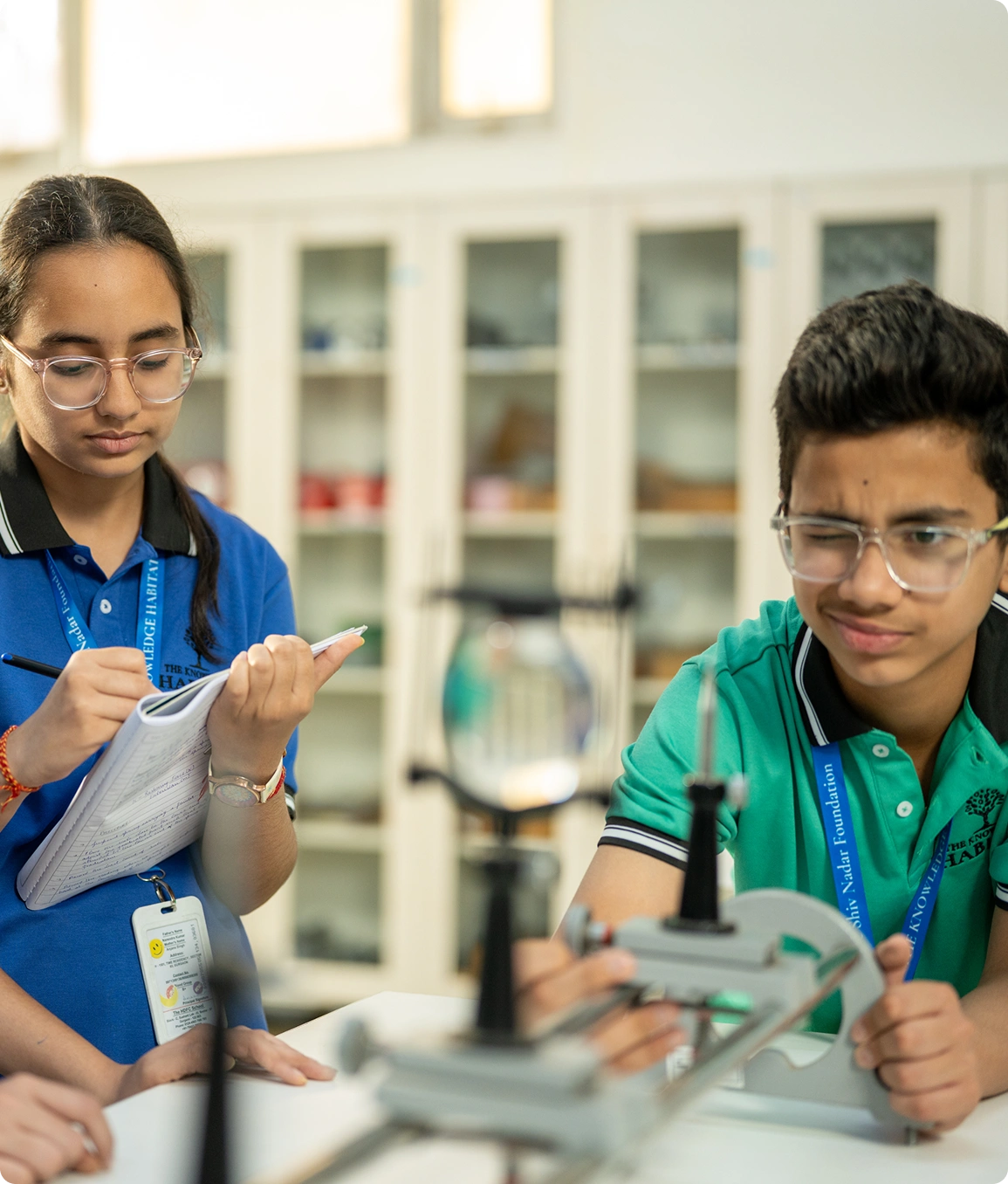
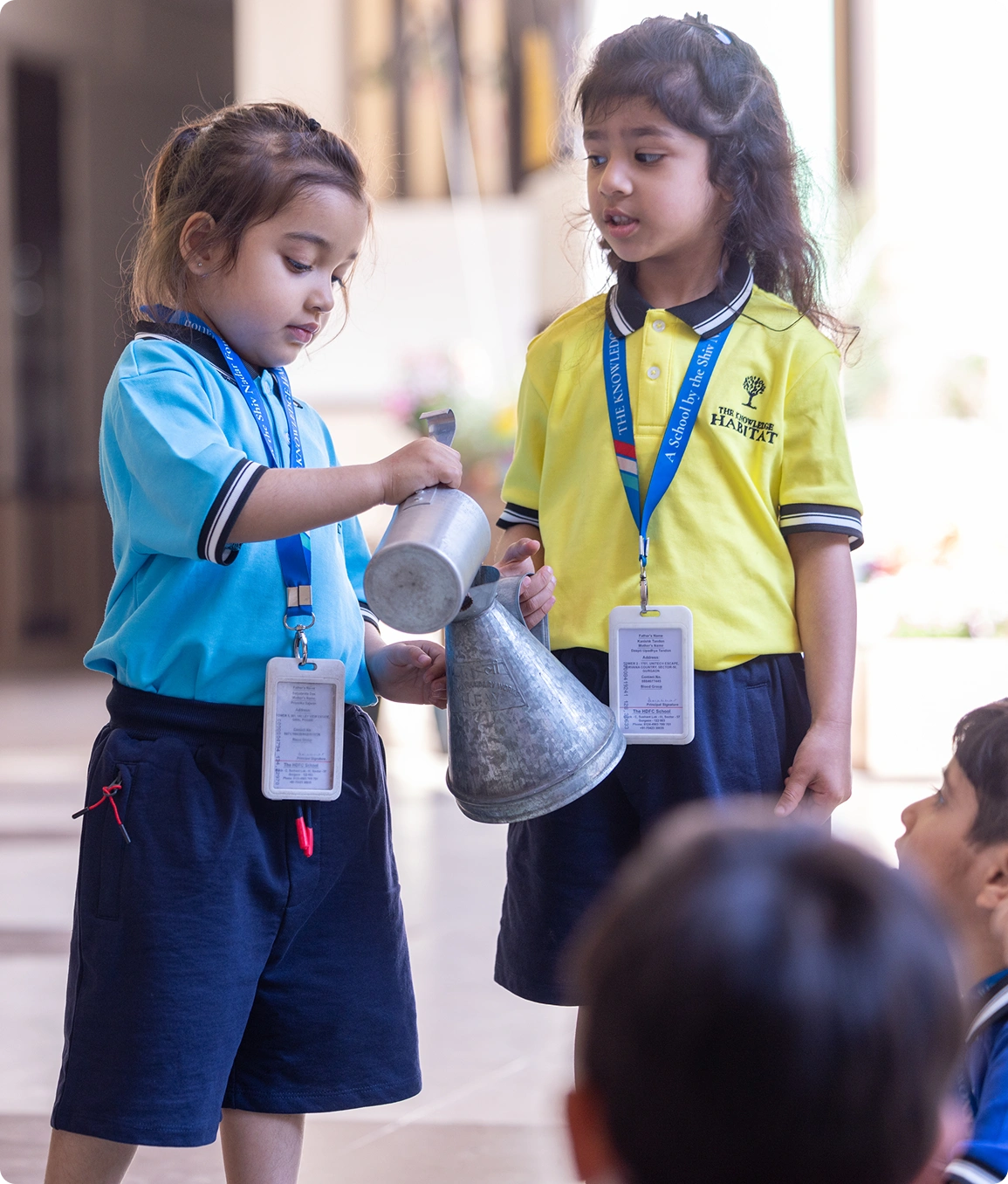
Exploration is integrated across all years. In the early stages, it takes the form of structured play and guided projects. Later, it becomes independent inquiry and cross-disciplinary research. The QAMITA principle-Questions Are More Important Than Answers-guides how students approach learning. Activities like the Interdisciplinary Project Display (IDP), where students explored topics such as Incredible India and The Magic of Recycling, show how exploration is practised through observation, curiosity, and early reasoning.




Our Philosophy
At The Knowledge Habitat, we measure education not by where a child begins, but by who they become. Our philosophy prioritises long-term growth over short-term performance, focusing on what endures: clarity of thought, adaptability, and purpose. This is not an abstract ideal—it informs how we structure classrooms, design curriculum, and define success.

At the heart of this approach is our founding belief: QAMITA — Questions Are More Important Than Answers.
We see inquiry not as a stage of early learning, but as a lifelong habit. Questions spark exploration. They challenge assumptions. They move students from passive reception to active understanding. This mindset builds independent thinkers—students who are able to examine problems, weigh perspectives, and think beyond the obvious.

Our classrooms are designed to make space for thought. Whether through project-based learning in primary years or real-world problem-solving in senior classes, students are encouraged to think aloud, revise their positions, and apply learning with precision. The goal is not merely to cover content, but to develop cognitive tools that travel with them beyond school.

In a world that is constantly shifting, answers can expire. The ability to ask better questions doesn’t.
QAMITA equips our students with a skillset that is durable, transferable, and essential—preparing them not just to keep pace with change, but to shape it.
The Knowledge Habitat, Gurugram operates with the sustained backing of the Shiv Nadar Foundation—a name synonymous with transformative education in India. This affiliation is not symbolic; it is foundational. It brings long-term investment in academic systems, infrastructure, and institutional continuity
1 / 3